A quiet but significant transformation is underway in Finnish organizations: artificial intelligence is changing leadership in ways that reach far beyond traditional HR processes. This change is visible almost everywhere in working life, from recruitment to skills development and employee well-being.
AI is shifting HR from its administrative function to a strategic partner involved in organizational decision-making. Already, some organizations are using systems that identify risks of employee burnout, skills gaps, or needs for re-skilling. In one financial sector company, AI supports both employee well-being and customer-facing work. At Kone Corporation, projects are being carried out where data is combined with employee experience and used through machine learning to develop new operating models.
This evolution opens the door to new kinds of hybrid roles in working life — such as an “AI interpreter” who ensures that algorithmic solutions reflect human values and needs.
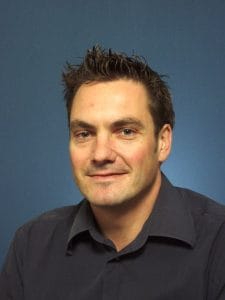
The future of HR will not simply mean managing people through algorithms. Rather, it will orchestrate employment relationships in AI-augmented work environments where people can perform and feel a sense of belonging. Our project ‘AI Futures for HRM’ seeks to understand how HR leaders and visionaries anticipate and shape the evolving role of AI in managing flexible, hybrid, and globally distributed work. We study what responsible, human-centric HRM will look like over the next decade, says project lead Peter Zettinig from the University of Turku.
Dr. Peter Zettinig, Adjunct Professor of International Business and University Researcher at the Turku School of Economics, received a three-year €150,000 grant from the Foundation for Economic Education in its 2025 funding round for the project AI Futures for HRM: Strategic Foresight for Responsible Human Resource Management in the Digital Workplace. The grant was awarded under the thematic special project Innovation, Commercialization, and Growth.
Are We Falling Into a Recruitment Trust Gap?
The automation of job search processes — and its implications — has prompted broad public debate. A situation in which an applicant’s resume is drafted by AI and then evaluated by an employer’s AI system is no longer a distant vision.
We may be heading toward a trust gap: applicants may feel they are being evaluated by an invisible system they cannot understand or challenge. Recruiters, meanwhile, are left wondering whether the polished text in front of them reflects a real person or merely a generative language model.
On the other hand, recruitment may move from static resumes toward more dynamic storytelling that highlights a candidate’s potential, capacity to learn, and emotional intelligence. According to Zettinig, AI can also support ethical recruitment practices — not merely replace them.
In SMEs, AI Is a Sparring Partner
Zettinig notes that AI’s greatest value often arises from everyday decisions, such as anticipating customer needs, recognizing diverse skills, and improving work organization. Many small-business owners describe leadership as a solitary journey with limited opportunities for shared ideation.
Successful SMEs treat AI as a learning or sparring partner, not as a control system. The firm’s and the entrepreneur’s cultural maturity — along with their data capabilities — determines how responsibly the technology is used. In the ‘AI Futures for HRM’ project, we examine this process through an adaptive learning model that shows how AI can help teams grow in competence, autonomy, and community.
Delphi Panel and New HR Scenarios
In the platform economy, experts use data extensively to assess trends, technologies, and market developments. Peter Zettinig’s research group uses AI-generated data as part of an iterative and interactive Delphi panel. The Delphi method, widely used in forecasting and expert assessment, provides a unique depth dimension to the three-year project. Through several rounds of futures dialogue, experts from participating companies explore alternative development paths.
The resulting scenarios can help Finnish organizations plan the future of work more consciously and more human-centrically.
The aim is not to predict the future, but to outline both desirable and cautionary trajectories that support ideation, innovation assessment, scenario building, and strategic prioritization.
Data Emerges from Everyday Work
In Zettinig’s earlier studies, the best insights have not come from massive databases, but from real-life interactions between employees and customers, for example in the financial sector.
AI has not replaced humans. It has given employees more confidence and satisfaction in their work.
In one technology company, data from customer behavior, buildings, kitchen equipment, and employees’ daily routines was creatively combined. The result: less food waste, smoother customer flow, and new innovations.
Can AI Make Work More Human?
AI comes with risks such as privacy concerns, transparency issues, and algorithmic bias. The European Union’s AI Act and Finland’s national guidelines set clear expectations for responsible AI, explainability, and human oversight.
According to Zettinig, these risks can also serve as mirrors within organizations. They compel companies to ask what a fair, inclusive, and human-centered working life means specifically in their own context.
Empathy can be written into an algorithm. Intelligent guidance systems can already detect stress, support team collaboration, and strengthen cross-cultural understanding. This allows technology to free up time for what is genuinely human in organizations: dialogue, support, and leadership.
Peter Zettinig’s research group emerged from scholars interested in understanding how leadership and work are changing in the age of AI. The three-year project at the Turku School of Economics includes Majid Aleem (DSc), Samar Hafeez (MScSoc), and Dan Ha Le (MSc). The project integrates perspectives from leadership, HR, strategic foresight, and artificial intelligence.